
Process
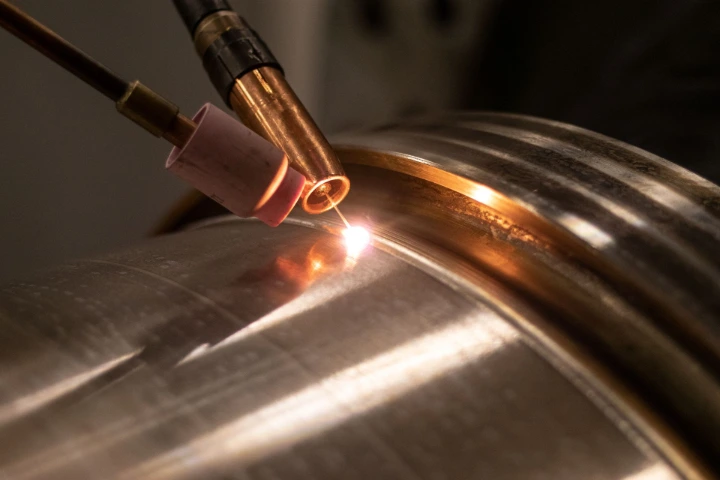
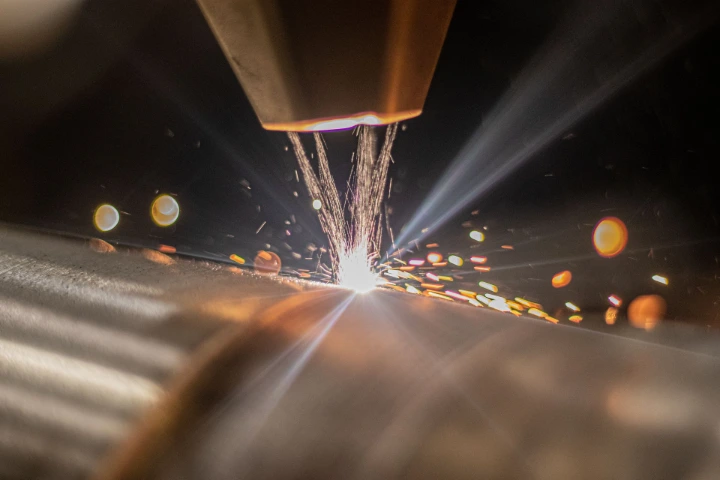
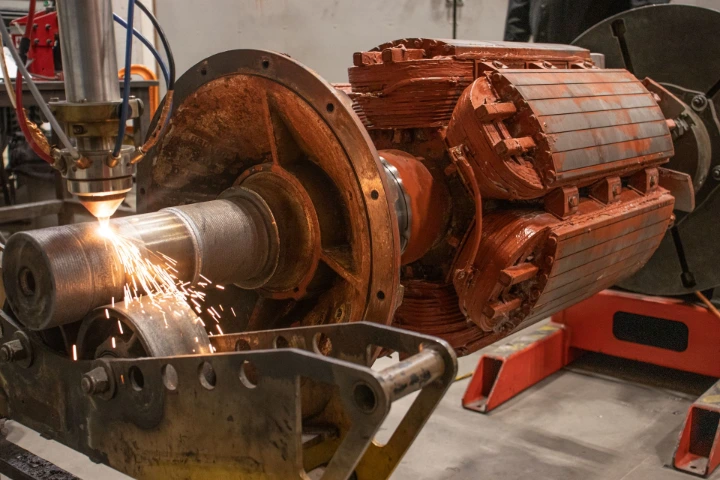
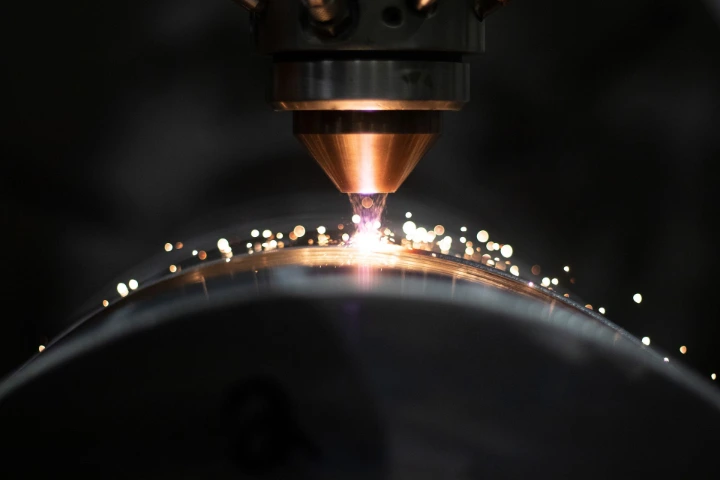
Laser cladding is a weld overlay process which uses a high-powered laser beam to form a melt pool on a metallic substrate. Metal powder or wire filler is fed into the melt pool forming a metallurgical bond with the substrate. The melt pool size is monitored using closed loop control, which reduces laser power as heat is built-up in the part. The cladding head is mounted to a robot or CNC machine programmed to accurately follow the surface of the component being cladded.
Advantages
Low Dilution Weld Overlay Process
The chemical composition and hardness of the weld overlay are maintained through the first pass of material. There is no need for multiple passes that add expense and stress into the parts.
Minimum Heat Input and Distortion
Finished components with tight tolerances can be welded with minimum risk of distortion. Parts with wall thickness as low as 1.5mm have been cladded without issue.
Metallurgical Bond
Unlike chroming and thermal spray processes, laser cladding is metallurgical bond - not mechanical. The welded overlay will not delaminate, fracture, or spall off. Laser cladded overlays can withstand significant abrasion and direct impact.
Unlimited Overlay & Substrate Combinations
Most overlay materials can be welded onto nearly any machinable metallic substrate, allowing high-performing alloys to be added strategically to less-expensive base materials.
Optimized Deposit
CNC/Robotic control coupled with closed loop spot size monitoring ensures consistent and accurate deposition ranging from 0.015" to more than 0.250" - minimizing or eliminating the need for post-weld processing.
Applications
Wear, corrosion and oxidization protection.
Refurbishment of high-cost components.
Additive manufacturing and feature addition.
Commonly Applied Materials
Stainless Steels (316, 410, 420, 15-5 PH, 17-4 PH, Duplex 2209)
Tool Steels (P20, H13, 4140)
Cobalt alloys (Stellite 6, 12, 21)
Nickel alloys (Inconel 625, Inconel 718, Hastelloy, Waspaloy)
Composite carbides (various grades of tungsten and vanadium carbide)
Industry Specific Examples
Oil & gas and mining drilling tools
Rolls (steel mills, pulp and paper)
Bearing surfaces
Seal surfaces
Valves
Thermowells
Wind turbine main shafts
Forging dies
Plastic injection molds
ABOUT US
For more than 40 years, Fusion Industrial Laser Services and our parent company Whitfield Welding Inc. have provided high-value repair, refurbishment, and part enhancement using cutting-edge laser and welding solutions for our customers in the automotive, mining/exploration, oil & gas, energy, aerospace, and defense industries.